Packaging Closure Attributes Explained
Closures do more than keep a container sealed. Features like ribbing, venting, liners, tamper-evident bands and child-resistent mechanisms all affect how a package performs and how customers interact with it.

This guide explains the most common packaging closure attributes, what they do and when they're typically used.
What Are Common Closure Styles?
Closures come in a variety of styles, each designed to improve functionality, appearance or both. Whether you're looking for a cap that's easier to grip, one that creates a premium look or one that aligns with your brand aesthetic, understanding the differences between common closure styles can help you choose the right option for your packaging.
Here are some of the most common closure styles that you'll encounter and where they're typically used.
A Guide to Common Packaging Closure Styles
| Closure Style | Attributes | Common Applications | Primary Benefit |
| Bold Ribbed | Thicker, raised ribs | Chemicals, pharmaceuticals | Maximum grip and ease of opening |
| Metal-Shelled | Plastic core with metal overcap | Luxury beauty, skincare | Decorative, high-end shelf appeal |
| Smooth | No external texture, clean finish with variety in color/size | Cosmetics, personal care | Premium aesthetic and brand flexibility |
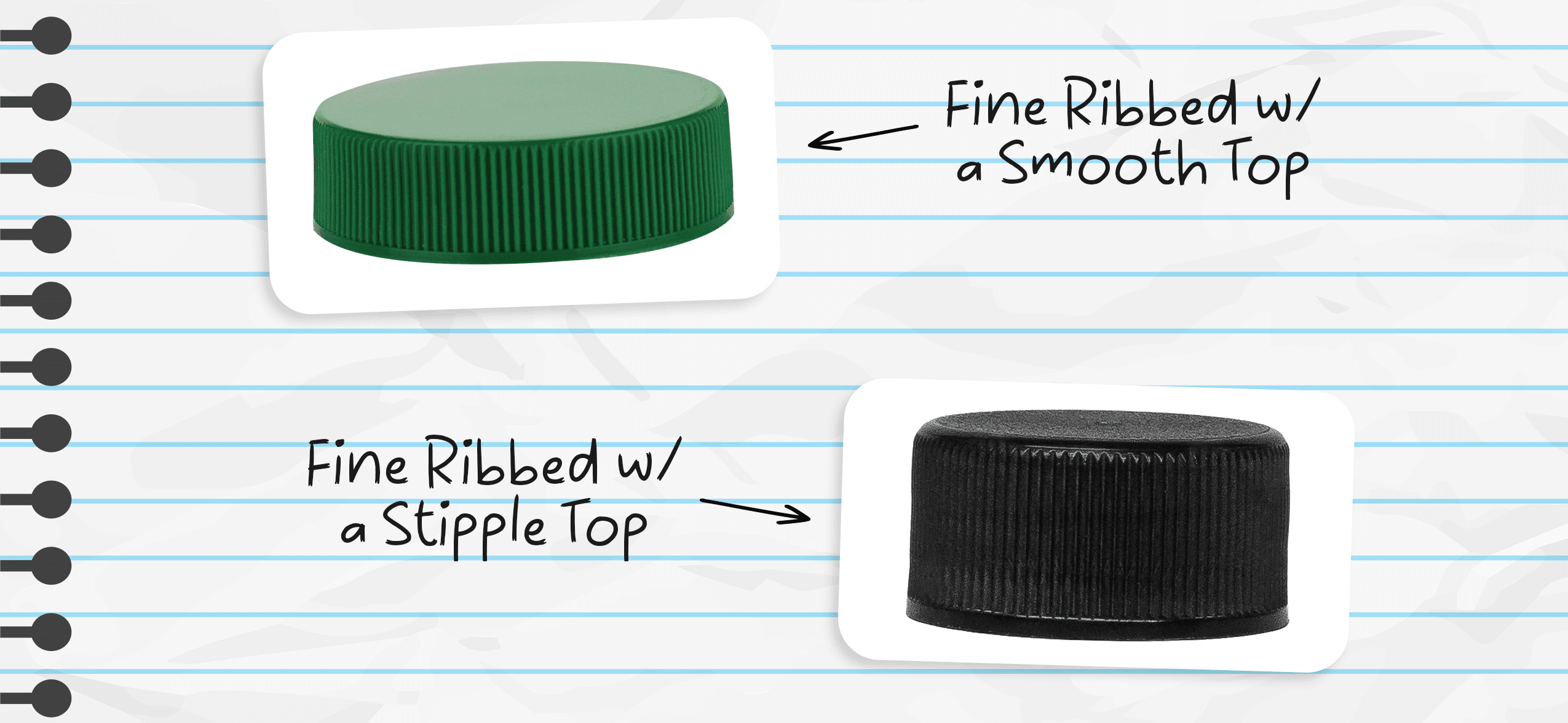
| Fine Ribbed | Thin, closely spaced ribbing | Supplements, food | Grip with refined appearance |
Note: Ribbing isn't just visual, it's functional. The deeper or more pronounced the ribbing, the easier it is to open in wet, gloved or high-frequency-use environments.
What is a Stacking Ring?
A Stacking Ring is the raised circular feature located on the top of a closure. Its primary function is to allow containers to be stacked securely on top of one another without slipping or damaging the closure surface.

In practice, stacking rings help improve:
- Storage efficiency in warehouses and retail environments
- Transport stability during shipping and palletization
- Product protection by reducing movement between stacked containers
Stacking rings are especially common in bulk packaging, industrial applications and products that are shipped or stored in multi-unit configurations.
Smooth vs. Matte/Stipple Tops